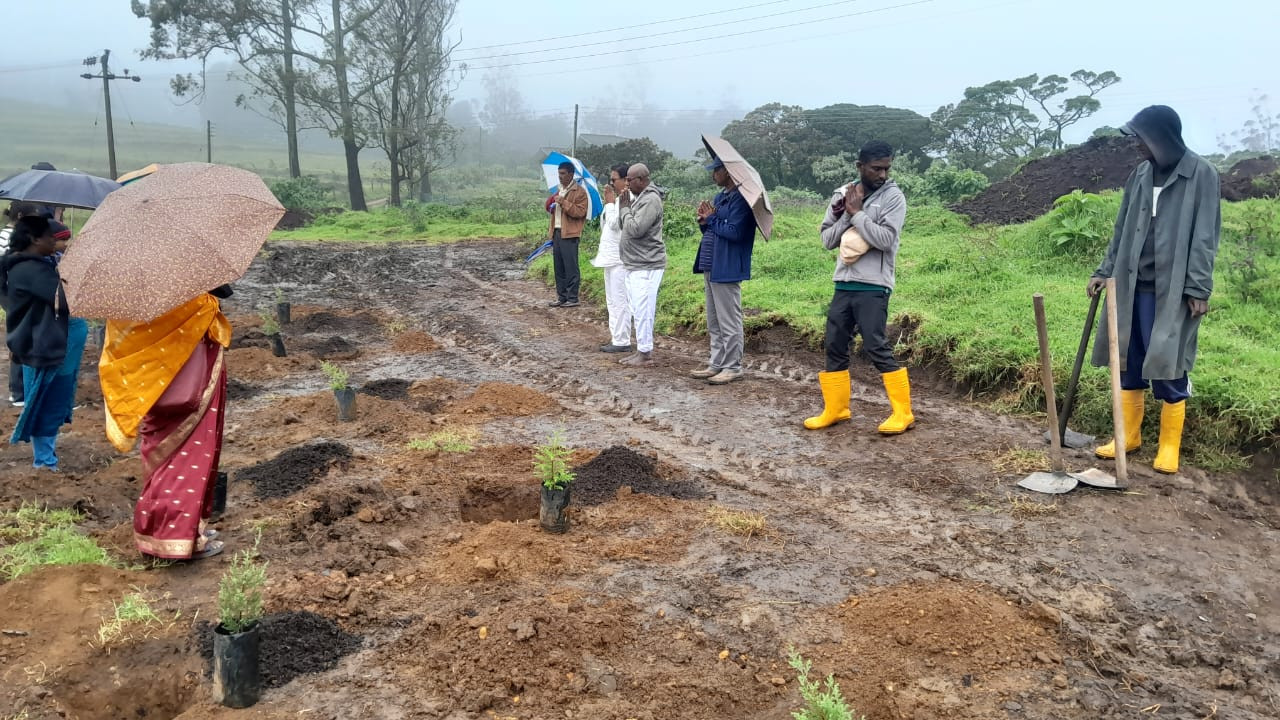
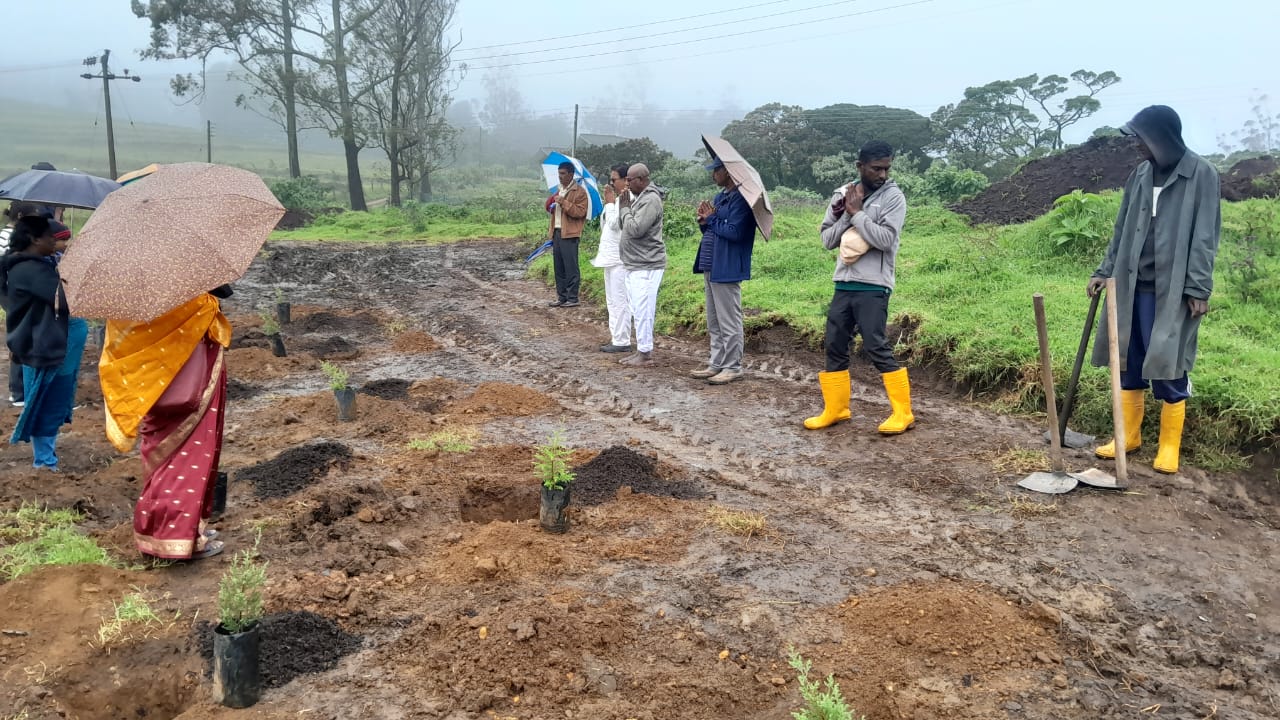
The Central region of SSIO in Sri Lanka initiated the planting of Leyland cypress trees in the hill country, known for its cold climate. On September 1, 2024, 350 cypress trees were planted in the Pidurutalagala mountain range, the highest mountain in Sri Lanka at 2,524 meters. Ten devotees from the Talawakelle Sai Centre participated in this tree-planting service.
The cypress, one of several conifer species belonging to the genus Cupressus, generally thrives in temperate climates. This medium-sized conifer tree was introduced to Sri Lanka's hill country by the British and can grow up to 40 meters tall, with a trunk diameter of up to 2.5 meters. Cypress trees are often used as ornamental plants in parks and gardens due to their aesthetic appeal and ability to prevent soil erosion. They also provide valuable habitats for wildlife and are a source of quality timber.
These trees were planted in the Pidurutalagala range because of their higher growth success rate compared to other plants in the area. They add scenic beauty to the landscape, particularly around the adjoining Agricultural Department’s Seeds Research Centre. Additionally, the dense foliage and rapid growth of the cypress trees act as a natural screen, protecting the research center's greenhouse from strong winds.
Cypress trees are also used as Christmas trees in Sri Lanka. Many people prefer them for Christmas decorations as they are environmentally friendly and biodegradable. The festive season demand for cypress trees has led to illegal cutting, which threatens the hill country's cypress population. Replanting these trees helps maintain the recreational beauty and economic value they add to Sri Lanka tourism.
Tree planting also raises awareness among local communities about the importance of these trees and encourages responsibility against illegal cutting.
Environmental Benefits:
- Erosion control: Cypress trees bind soil, helping to prevent erosion.
- Carbon sequestration: Like all trees, cypress trees absorb carbon dioxide, contributing to climate change mitigation.
- Habitat creation: They provide habitats for wildlife species such as birds and insects.
Aesthetic and Landscaping Benefits:
- Privacy screens: Cypress trees serve as natural privacy screens.
- Windbreaks: They are effective windbreaks in gardens and farmlands.
Economic Benefits:
- Timber production: Cypress wood is durable and has a pleasant fragrance, making it suitable for construction.
Christmas decorations: Cypress branches are used as decorative Christmas trees during the festive season.